

What the ATO already knows — and what you need to do about it.
In our experience, there are two types of tax mistakes. The first is the accidental mistake — an honest error in a deduction calculation, a missed income item, or a misunderstood rule. These are usually resolved with an amendment and some interest. They're inconvenient but manageable.
The second is the preventable mistake — situations where the taxpayer knew, or should have known, about an obligation but didn't meet it. These create more significant exposure. The challenge is that more and more taxpayers are making preventable mistakes while assuming they won't be detected — because they don't realise how much data the ATO already holds about them.
This article is designed to close that gap. Whether you're a salaried employee, an investor, a property owner, or a business owner, understanding the data matching behind ATO reviews 2026 — and keeping the right records — is one of the most valuable things you can do before lodging your return.
Written by the Tax NextGen Advisory Team
Registered Tax Agents (No. 25664246) with 20+ years of experience preparing returns with compliance in mind. This article reflects current ATO practice as at the 2025–26 financial year. Contact our team for advice on your specific circumstances.
1. The ATO Already Knows More Than You Think
The ATO does not rely on taxpayers to self-declare information. It receives data from hundreds of third-party sources — including employers, financial institutions, state and territory government agencies, and overseas tax authorities — and cross-references it against lodged returns automatically.
Some of the data the ATO regularly receives:
- Employers: Salary and wages, PAYG withholding, allowances, and superannuation — reported in real time through Single Touch Payroll
- Banks and financial institutions: Bank interest, term deposit interest, managed fund distributions
- Share registries and brokers: Dividend payments, franking credits, and in some cases share transaction data
- Rental platforms: Airbnb, Stayz and similar platforms report rental income received by hosts
- Ride-share and delivery platforms: Uber, DoorDash, Menulog and similar platforms report earnings
- Cryptocurrency exchanges: Australian exchanges report user transaction data
- State revenue offices: Property purchase and sale records, land transfer data
- ASIC and ABR: Company and business registrations, directorship records
- Department of Home Affairs & foreign tax authorities: Visa status, travel records, and financial account data exchanged under the OECD Common Reporting Standard (CRS)
When you lodge, the ATO compares your declared income and deductions against the data it already holds. Discrepancies generate review flags — and those flags lead to "please explain" letters, amended assessments, or formal audits, depending on the nature and size of the discrepancy.
2. Bank Interest, Shares and Crypto Data Matching
Three of the highest-priority data matching streams ahead of ATO reviews in 2026 are bank interest, share investments, and cryptocurrency.
Bank interest
Every bank account held by an Australian resident is reported to the ATO, and interest earned in 2025–26 is pre-filled in myGov. Common issues we see:
- • Joint account interest not split correctly between account holders
- • Term deposit interest paid on maturity not declared in the correct year
- • Interest from foreign bank accounts not declared
- • High-yield savings interest missed because myGov was checked in July before full-year data loaded
Dividend income
Share registries report dividends and franking credits to the ATO, pre-filled in myGov. Common issues:
- • Dividends declared but franking credits omitted — under-reporting grossed-up income
- • Dividends from international shares not declared
- • Dividend reinvestment plan shares not included as income
Cryptocurrency
As covered in our guide on crypto tax in Australia and ATO data matching, Australian exchanges are required to report user data to the ATO. The ATO has confirmed it is using this data to identify taxpayers who have not correctly reported crypto gains and income, and it sends pre-lodgement letters to those it believes have unreported activity. Receiving one of these letters is a strong signal that your return needs to include the relevant information.
3. Foreign Income Reporting
Foreign income is one of the most commonly under-reported categories in Australian tax returns — particularly for migrants, recent permanent residents, and Australians with overseas investments. Australian tax residents must declare their worldwide income, including:
- • Interest from overseas bank accounts
- • Foreign share dividends
- • Overseas rental income
- • Foreign business or employment income
- • Distributions from overseas trusts or family arrangements
- • Pension and annuity income from overseas
Australia participates in the OECD Common Reporting Standard (CRS). Financial institutions in over 100 countries report account information — balances, interest, and dividends — to their tax authorities, and Australia's partner countries share this with the ATO. Practically, that means your overseas fixed deposit interest, your UK or US share account activity, and your overseas rental income may all already be visible. Assuming foreign income goes undetected is an increasingly risky position.
Note for temporary residents: You may qualify for the temporary resident exemption on foreign income — but it ceases once permanent residency is granted. If your visa status changed during the year, your foreign income obligations may have changed too. See our guide on working holiday, 485 and temporary visa tax rules.
4. Common Audit Triggers We Saw in 2025
Tax NextGen's team prepared thousands of returns in 2025. The issues that most often raised compliance flags or led to ATO correspondence were:
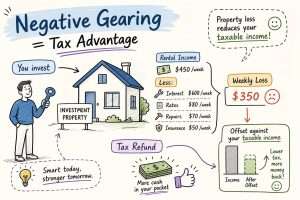
- Rental deductions disproportionate to rental income: Negative gearing is entirely legitimate, but where interest and other deductions substantially exceed rental income for several consecutive years, the proportions attract scrutiny — and claims must be supported.
- Working from home deductions without records: Under the revised fixed rate method (70 cents per hour for 2024–25), you must keep a record of actual hours worked from home across the full year. A sample diary is no longer sufficient, and the ATO has flagged this as a priority.
- Large deductions without supporting documentation: Vehicle claims without a logbook, travel without records, or uniform claims for non-occupation-specific clothing. The ATO's risk-profiling flags returns where deduction levels are inconsistent with income type or industry.
- Undeclared gig economy income: The ATO receives data from Uber, Airbnb, DoorDash, Airtasker, Fiverr and similar platforms. This income is assessable and must be declared — even amounts as small as a few hundred dollars.
- ABN income without corresponding BAS lodgements: If your turnover exceeded $75,000 you generally must be registered for GST and lodging BAS. Earning ABN income without meeting that obligation is visible to the ATO through its systems.
- Capital gains from property not declared: Property transaction data from state and territory revenue offices is shared with the ATO. If you sold a property and did not declare a capital gain, the ATO will identify it.
Free Download
IT Professional's Tax Health Check Checklist
15 tax questions every employee, contractor, and freelancer should ask before they lodge.
Download Now5. What Records Should You Keep for 2026?
The obligation to keep records extends for five years from when you lodge your return, or longer in certain circumstances. What you need depends on your situation.
All taxpayers
- ✓ Bank statements for all Australian and foreign accounts
- ✓ Income statements from all employers
- ✓ PAYG payment summaries or income statements from Centrelink and government agencies
- ✓ Health insurance statements (for Medicare levy surcharge purposes)
Investors (shares, ETFs, managed funds)
- ✓ Brokerage statements showing all transactions
- ✓ ETF and managed fund annual tax statements
- ✓ Records of all purchases and sales — date, quantity, price, brokerage fee
- ✓ DRP statements showing reinvested dividends, and ESS statements from your employer
For the detail on how these are taxed, see our guides on shares, ETFs and capital gains tax and employee share schemes and tax time.
Crypto holders
- ✓ Full transaction history from all exchanges, in a tax-software-compatible format
- ✓ Records of wallet addresses and transfers between wallets
- ✓ Records of staking, airdrop and DeFi reward receipts with dates and values
- ✓ CSV exports or reports from tax software such as Koinly or CryptoTaxCalculator
Property investors
- ✓ Rental income statements from your property manager
- ✓ All expense receipts — rates, insurance, repairs, agent fees
- ✓ Loan statements showing interest charged for the year
- ✓ Depreciation schedule from a registered quantity surveyor, and records of capital improvements
- ✓ Purchase and sale documentation (for eventual CGT calculation)
Work-related deductions
- ✓ A record of hours worked from home — calendar, spreadsheet, or diary — for the full year
- ✓ Receipts for any work-related equipment, uniforms, or tools
- ✓ Vehicle logbook (if claiming car expenses under the logbook method)
- ✓ Receipts for any self-education expenses
Key Takeaways
- ✓ The data behind ATO reviews 2026 comes from hundreds of sources — bank interest, shares, crypto, rental platforms, and overseas tax authorities
- ✓ Foreign income is increasingly visible through the Common Reporting Standard — under-reporting is harder to sustain
- ✓ Working from home deductions require a full-year record of hours — not a sample diary
- ✓ Common triggers include disproportionate rental deductions, undeclared gig income, and unsupported vehicle claims
- ✓ Start keeping your 2025–26 records now — don't wait until July
Not Originally From Australia?
Don't worry! We speak in your language.
Not Sure What the ATO Already Knows?
100% Max Refund Guaranteed · 7 Days Refund · 24 Hours Processing · 20+ Years
Check Your Tax ComplianceDisclaimer: Information contained in this publication is general in nature and has been prepared for information purposes only. It does not constitute legal, taxation, or financial advice. Professional advice should be sought before acting on any information contained in this publication.




One Response